

Maintenance performance indicators: best practices
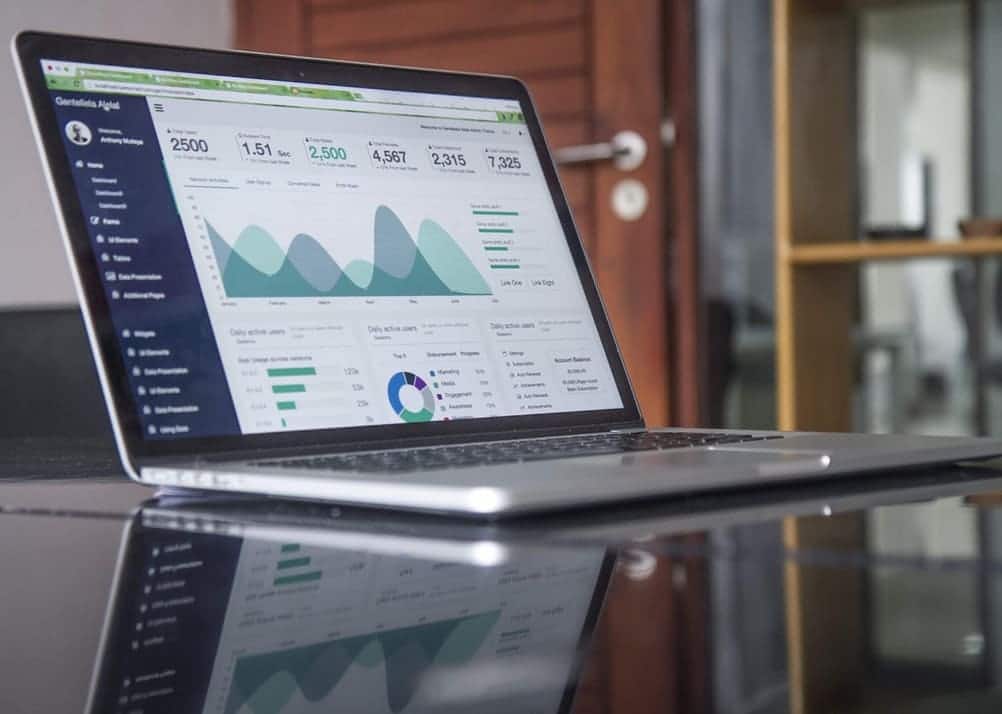
There are many performance indicators (KPIs) that can be used to measure your maintenance performance. It is important to select the right performance indicators for your application and to use them appropriately to obtain useful results.
Here are some best practices for using maintenance performance indicators:
- Identify maintenance objectives: before selecting performance indicators, it is important to define maintenance objectives, such as equipment availability, product quality, customer satisfaction, etc.
- Select relevant indicators: it is important to select relevant indicators for your application and use them appropriately. It is important not to overload the indicators and not to stick to a single indicator to evaluate maintenance performance.
- Track indicators regularly: it is important to track indicators regularly to obtain an overview of maintenance performance and to identify trends and potential problems.
- Use indicators to make decisions: it is important to use indicators to make decisions and to identify opportunities for improvement.
- Communicate results: it is important to communicate the results of performance indicators to the various stakeholders to improve transparency and collaboration.
- Continue to improve: it is important to continue improving performance indicators based on the results obtained and changes within the company.
By selecting the right performance indicators, using them appropriately, and using them to make decisions, companies can improve maintenance performance and achieve corporate objectives.
What are the KPIs for a maintenance department?
There are several key performance indicators (KPIs) commonly used to measure the performance of a maintenance department. Here are a few examples:
- Mean Time To Repair (MTTR): measures the duration between the discovery of a failure and its repair.
- Availability rate: measures the proportion of time the system is operational compared to the total time.
- Failure rate: measures the number of failures per unit of time.
- Maintenance cost: measures the total cost of maintenance relative to the total cost of ownership of the system.
- Intervention success rate: measures the percentage of maintenance interventions that were successful (i.e., that resolved the problem or improved system performance).
- Compliance rate: measures the percentage of maintenance interventions that were carried out in accordance with established procedures.
- MTBF (Mean Time Between Failure): measures the average time between two failures of a piece of equipment.
- Equipment utilization rate: measures the proportion of time equipment is used compared to the total time.
- Customer satisfaction rate: measures customer satisfaction with the maintenance services provided.
It is important to note that these indicators vary depending on the application, and it may be necessary to select relevant KPIs for each specific system or installation. It is also important to implement performance indicators for both preventive and corrective maintenance activities.
How do I know if my maintenance is performing well?
There are several ways to measure the maintenance performance of a system or installation. Here are some commonly used indicators:
- Availability rate: measures the proportion of time the system is operational compared to the total time.
- Failure rate: measures the number of failures per unit of time.
- Repair time: measures the duration between the discovery of a failure and its repair.
- Maintenance cost: measures the total cost of maintenance relative to the total cost of ownership of the system.
It is important to note that it can be useful to combine these indicators to get an overview of maintenance performance. It may also be necessary to adapt them based on the specific application. It is also important to implement performance indicators for both preventive and corrective maintenance activities.
How does Bob! Desk help improve maintenance performance?
Computerized Maintenance Management System (CMMS) is an IT tool that optimizes maintenance performance by automating administrative tasks and providing real-time information on the status of equipment and installations.
Here are some ways CMMS can improve maintenance performance:
- Automated maintenance task scheduling: CMMS can automate the scheduling of preventive maintenance tasks and correct human errors.
- Real-time data tracking: CMMS allows for tracking the history of equipment and installations, as well as maintenance performance, which helps detect potential problems and resolve them quickly.
- Improved communication: CMMS enables effective communication between different stakeholders, including maintenance technicians, engineers, and maintenance managers, allowing problems to be resolved faster.
- Cost optimization: CMMS allows for more efficient planning of maintenance tasks, reducing downtime and minimizing maintenance costs by using historical equipment data.
- Reporting and analysis: CMMS allows for the generation of detailed reports on maintenance performance, costs, availability rates, downtime, etc. This helps identify trends and opportunities for improvement.
By using a CMMS, companies can improve their maintenance performance by automating administrative tasks, improving communication, and using real-time data to identify potential problems and resolve them quickly.
How should my CMMS allow me to track my performance indicators?
A Computerized Maintenance Management System (CMMS) is an IT tool that can help
A Computerized Maintenance Management System (CMMS) is an IT tool that can help track maintenance performance indicators by automating administrative tasks and providing real-time information on the status of equipment and installations.
CMMS allows for the centralized collection, storage, and analysis of maintenance data, facilitating access to information and the understanding of key performance indicators. It also allows for the setup of alerts and notifications for specific defined performance limits, enabling rapid intervention if thresholds are exceeded.
By using a CMMS, companies can implement procedures for tracking maintenance performance indicators to identify trends and potential problems, thereby improving maintenance performance by reducing costs and downtime, and increasing customer satisfaction.
How does tracking my performance indicators help me optimize costs?
There are several ways to optimize costs related to the maintenance department. Here are a few examples:
- Preventive maintenance: by regularly scheduling preventive maintenance tasks, you can reduce the risk of failure and extend equipment lifespan, which helps reduce corrective maintenance costs.
- Data analysis: by using equipment and installation data to identify trends and potential problems, you can target maintenance tasks on the most critical equipment and reduce unnecessary maintenance costs.
- Supplier selection: by carefully selecting spare parts suppliers and maintenance service providers, you can reduce costs by obtaining competitive prices and choosing reliable suppliers who can respond quickly to maintenance needs.
- Storage: by effectively managing spare parts inventory, you can reduce costs related to ordering excess parts or emergency orders.
- Employee training: by training employees on equipment use and maintenance, you can reduce costs related to human error and improve equipment performance.
- Use of technology: using tools such as CMMS, predictive maintenance, augmented reality, and robotics can also optimize maintenance costs by automating certain tasks, improving data quality, and reducing downtime.
It is important to note that optimizing maintenance costs requires careful planning and analysis, as well as continuous monitoring to identify opportunities for improvement.