

Corrective Maintenance: Definition, Management, and Tips


Corrective Maintenance: What You Need to Know 👇
Table of Contents
- Definition of Corrective Maintenance
- Identifying Types of Corrective Maintenance
- Advantages and Disadvantages
- Strategies for Reducing Corrective Maintenance
- Role of CMMS in Corrective Maintenance
- Financial and Operational Impact
- Tips for Optimizing Your Corrective Maintenance
- Which KPIs should I track to know if my company’s corrective maintenance is optimized?
- How can Bob! Desk help me manage my corrective maintenance?
- Key takeaways
What is Corrective Maintenance? Definition:
Corrective maintenance is a type of maintenance used to repair equipment, systems, or infrastructure that have experienced a breakdown or failure. It focuses on quickly restoring the equipment to normal operation by identifying and correcting the problems that caused the failure. This form of maintenance is often used in response to unforeseen breakdowns or unexpected equipment shutdowns. Corrective maintenance can be performed by internal technicians or external service providers depending on the needs and available resources.
Here are other synonyms for corrective maintenance:
- Corrective repair
- Corrective maintenance
- Refurbishment maintenance
- Troubleshooting maintenance
- Anomaly correction
- Functionality restoration
- Defect repair
- Breakdown correction
Identifying Types of Corrective Maintenance
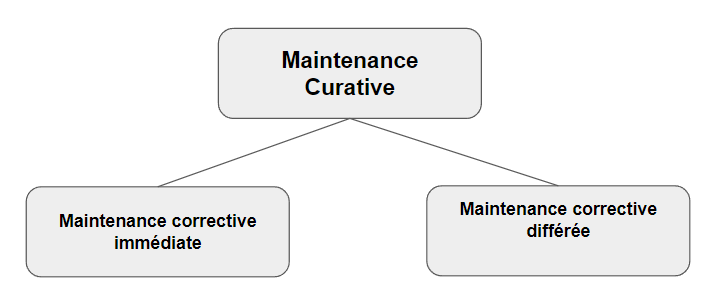
Corrective maintenance is subdivided into several categories, each adapted to specific situations:
- Immediate corrective maintenance: Rapid interventions required to correct critical failures that immediately affect production.
- Deferred corrective maintenance: Repairs that are not immediately critical but are planned to prevent future failures and optimize the maintenance schedule.
These distinctions allow for more efficient resource management and better planning of interventions.
Advantages and Disadvantages
Benefits
Corrective maintenance offers several advantages:
- Rapid intervention: Reduces downtime by reacting immediately to breakdowns.
- Increased equipment lifespan: Often extends the life of machines through targeted repairs.
- Improved safety: Prevents safety risks associated with faulty equipment.
Disadvantages
However, corrective maintenance has disadvantages:
- Higher costs: Often more expensive than preventive maintenance due to the urgency and complexity of repairs.
- Difficult planning: Unpredictable breakdowns can disrupt regular operations.
- Increased wear: Frequent repairs can accelerate the general wear and tear of machines.
Strategies for Reducing Corrective Maintenance
To reduce reliance on corrective maintenance, it is essential to adopt proactive strategies:
- Preventive maintenance: Regular maintenance planning to prevent failures before they occur.
- Predictive maintenance: Use of advanced technologies to monitor equipment condition and predict future failures.
- Continuous training: Ensure regular staff training to quickly identify and resolve problems before they lead to major breakdowns.
By implementing these strategies, companies can significantly reduce unplanned interruptions and optimize equipment longevity. For more information, consult this expert article: Wikipedia on predictive maintenance.
How to Effectively Manage Corrective Maintenance?
To effectively manage corrective maintenance, it is important to follow these steps:
- Establishing a breakdown reporting system: define a clear method for employees to report equipment breakdowns or failures, to ensure rapid and efficient processing.
- Planning corrective maintenance: establish a strategy for corrective maintenance based on equipment criticality and availability, to minimize downtime and repair costs.
- Stocking necessary spare parts and tools: keep necessary spare parts and tools in stock for repairs, to minimize downtime and repair costs.
- Training maintenance technicians: train maintenance technicians for diagnosing and repairing failures, to ensure rapid and efficient repair.
- Monitoring breakdowns and repairs: record and track breakdowns and repairs, to identify trends and opportunities for improvement for more effective maintenance.
By following these steps, you can effectively manage corrective maintenance and minimize downtime and costs associated with equipment repair.
The Role of CMMS in Corrective Maintenance Management
Computerized Maintenance Management System (CMMS) is a powerful tool for the effective management of corrective maintenance. The role of CMMS in corrective maintenance management includes:
-
- Repair planning: CMMS can plan repairs based on the availability of equipment, technicians, and spare parts, which optimizes time and costs.
- Stocking and tracking spare parts: CMMS can manage spare parts inventories for repairs, which facilitates planning and expense tracking.
- Documentation: CMMS can maintain comprehensive and up-to-date documentation on equipment and repairs performed, which facilitates planning and expense tracking.
- Data analysis: CMMS can collect and analyze data on corrective maintenance performance to uncover opportunities for improvement.
- Monitoring and reporting: CMMS can track repair costs, including the costs of spare parts, labor, and tools, which facilitates planning and expense tracking.
By using CMMS to manage corrective maintenance, you can optimize time and costs, improve equipment performance, and ensure customer satisfaction.
Financial and Operational Impact of Corrective Maintenance
The financial and operational impact of corrective maintenance is significant for businesses. Here are the main aspects:
- Direct costs: Emergency interventions can be costly due to the urgency of repairs and often required overtime.
- Production loss: Unplanned breakdowns lead to production stoppages that reduce productivity and increase operational costs.
- Equipment wear: Frequent repairs can accelerate machine wear, increasing long-term costs.
Minimizing these impacts requires a more proactive maintenance strategy, integrating predictive maintenance technologies and the effective use of a CMMS for optimal management.
Here are some tips for optimizing your corrective maintenance:
-
Plan repairs based on the availability of technicians and equipment so that everything runs smoothly.
- Manage spare parts inventories for repairs to avoid unpleasant surprises.
- Maintain comprehensive and up-to-date documentation on equipment and repairs performed to make your life easier.
- Train your teams and keep your technicians competent for repairs, so that everything is always in order.
- Track repair costs, including the costs of spare parts, labor, and tools, to always stay in control.
- Use data on corrective maintenance performance to discover opportunities for improvement and make the best decisions.
- Work closely with suppliers to ensure everything is always at hand.
By following these tips, you can improve your company’s corrective maintenance so that everything goes well and your customers are satisfied.
Which KPIs should I track to know if my company’s corrective maintenance is optimized?
Key Performance Indicators (KPIs) to measure the optimization of a company’s corrective maintenance include:
- Response time: measurement of the time required to respond to a corrective maintenance request.
- Repair duration: measurement of the time required to perform a repair.
- Number of successful repairs: number of repairs successfully completed.
- Number of multi-intervention repairs: number of repairs that require multiple interventions to be resolved.
- Cost of repairs: total cost of corrective maintenance operations, including the costs of spare parts, labor, and tools.
- Customer satisfaction rate: measurement of customer satisfaction in terms of the speed and quality of repairs.
By monitoring these KPIs, you can evaluate the effectiveness of your corrective maintenance and take necessary measures to improve processes and results.
How can Bob! Desk help me manage my corrective maintenance?
Bob! Desk, a corrective maintenance management tool, can help you in several ways:
- Real-time tracking: Bob! Desk allows you to track corrective maintenance requests in real-time and assign tasks to qualified technicians.
- Planning and scheduling: Bob! Desk helps you plan repairs based on the availability of technicians and equipment, to maximize the efficiency and speed of repairs.
- Cost tracking: Bob! Desk allows you to track repair costs, including the costs of spare parts, labor, and tools, to help you better control expenses.
- Reporting and analysis: Bob! Desk provides reports and analyses on corrective maintenance performance, allowing you to identify opportunities for improvement and make informed decisions.
By using Bob! Desk, you can improve your corrective maintenance management, accelerate repairs, reduce costs, and enhance customer satisfaction.
Effective management of corrective maintenance is crucial for companies wishing to keep their equipment in good working order. This can be achieved notably by using a Computerized Maintenance Management System (CMMS), which allows for planning repairs, tracking spare parts, documenting repairs, and collecting and analyzing data. You will optimize your time and maintenance costs, improve equipment performance, and ensure customer satisfaction. Corrective maintenance is therefore a key element of the overall maintenance strategy for businesses and an important part of the asset management process.
Key Takeaways on Corrective Maintenance
Corrective maintenance is essential for effectively managing unforeseen breakdowns and minimizing production stoppages. By combining preventive and predictive maintenance strategies, and using tools like CMMS, companies can reduce the frequency and impact of corrective interventions. This not only contributes to improving equipment durability but also optimizes maintenance costs and strengthens overall facility safety.
Discover Bob! Desk Offers
What is corrective maintenance and why is it important?
Corrective maintenance involves repairing or replacing faulty equipment after a breakdown to restore proper functioning. It is essential because it minimizes downtime, ensures operational continuity, and extends equipment lifespan.
What types of equipment require corrective maintenance?
All types of equipment may require corrective maintenance, including industrial machinery, heating, ventilation, and air conditioning (HVAC) systems, IT equipment, and electrical installations. Corrective maintenance is crucial to avoid service interruptions and ensure user safety.
How does Bob! Desk improve corrective maintenance management?
Bob! Desk simplifies corrective maintenance management by centralizing all intervention data, automating ticket creation and assignment processes, and providing detailed performance reports. This reduces downtime, improves operational efficiency, and facilitates data-driven decision-making.
What are the main features of Bob! Desk's corrective maintenance solution?
Key features include the creation, validation, and assignment of interventions, managing technicians by skills and intervention zones, adding relevant documents (photos, quotes, invoices, notes), and real-time monitoring of performance indicators.
Is it possible to customize intervention reports with Bob! Desk?
Yes, Bob! Desk allows you to customize intervention reports according to your specific needs. You can add customizable fields, photos, videos, and other documents to detail each intervention.
Can I use Bob! Desk on mobile and tablet?
Yes, Bob! Desk is accessible on phone, tablet, and PC. This multi-platform compatibility allows you to manage your interventions wherever you are, ensuring increased flexibility and responsiveness.
How can I start using Bob! Desk for corrective maintenance?
To start using Bob! Desk, you can sign up for a free trial on our website. If you have any questions or need a personalized demonstration, please do not hesitate to contact our team via the contact form or by phone. We will be happy to help you optimize your corrective maintenance management.
How can I track the status of my interventions with Bob! Desk?
With Bob! Desk, you can track the status of your interventions in real-time through an intuitive interface. You will receive notifications on the progress of interventions, and you can consult detailed reports on performance and resolution times.
An expert team at your service
Choosing Bob! Desk and our CMMS software also means choosing a team, based in Paris, available from 8 AM to 10 PM, 6 days a week, to answer any questions you may have.
A passionate, reactive team that loves to toast with its clients! 🍾
See you soon!